
Key takeaways
- Home shoulder exercises offer more control over how the shoulder, upper back, and core work together compared to gym machines.
- Band pull-aparts, half-kneeling presses, down dog to cobra, and shoulder halos train strength and mobility using only a light band and one dumbbell.
- Program these exercises three to four days per week, starting light and progressing reps before adding weight or trying new variations.
For adults over 60, shoulder strength means reaching, pressing, and carrying with confidence during daily life. Gym machines guide your movement along a fixed path, which can be useful for isolation training. Home exercises, by contrast, let you build strength with more control over how the shoulder, upper back, and core work together. That integration makes the training feel more connected to everyday movement—the kind of strength that actually transfers to tasks like reaching for a top shelf or carrying groceries.
Before choosing exercises, take time to assess how your shoulder moves. Can your arm go overhead without your ribs flaring out? Can your shoulder blade move cleanly through space without compensating? These coaching details tell you which exercises will help most and which to avoid for now. Once you have a clear picture of your movement patterns, you can train with confidence and avoid movements that might aggravate the joint.
A light band and one dumbbell are all you need to rebuild shoulder strength using four exercises that train strength, control, and smoother movement around the joint. The session takes 15 to 20 minutes and works well as part of your regular training routine.
Band Pull-Aparts: Building the Upper Back
Band pull-aparts are simple but do important work. They strengthen the upper back and rear deltoids, the muscles that help your shoulders sit in a better position before pressing, reaching, or lifting overhead. When your rear delts are strong, your shoulders don’t round forward as much, which means less strain on the front of the shoulder joint. This positioning is foundational for almost every overhead movement you’ll do.
Place pull-aparts early in a shoulder session because the movement gives you quick feedback about your form. If you rush a rep or shrug your shoulders upward, you’ll feel the band pull you out of position immediately. This feedback loop teaches good movement habits fast, which is why many coaches program this as a primer for heavier shoulder work.
Form, Muscles, and Reps
Keep your shoulders relaxed as your upper back does the work. That difference—relaxed shoulders versus shrugged shoulders—separates a good rep from a wasted one. The muscles trained are the rear deltoids, upper back, rotator cuff, and shoulders. Perform 2 to 3 sets of 12 to 15 reps. The higher rep range in pull-aparts builds endurance in the upper back, which supports shoulder stability throughout your day.
Variations to Adjust Difficulty
A lighter band pull-apart reduces resistance. Palms-up pull-aparts hit the back differently and can feel easier on the shoulders if you have any tightness in the front. Diagonal band pull-aparts challenge stability in a new plane of motion and add some core demand to the movement.
Half-Kneeling Press: Overhead Strength With Stability
The half-kneeling press tells you a lot about how your shoulder handles overhead work. With one knee down, it becomes harder to lean back and turn the press into a lower-back exercise. This setup gives the shoulder a clearer job and helps you build strength with better control. Your core also has to work harder to keep your spine stable when you’re kneeling on one knee.
Start light and press smoothly through the movement. Keep the top of the rep strong without forcing it. As the dumbbell moves overhead, keep your ribs down. The half-kneeling position eliminates a common compensation pattern, so your shoulder does the actual work instead of your lower back taking over.
Why One Knee Down Changes Everything
This single detail—one knee down—changes the whole exercise. It forces your core to work differently and keeps your shoulder honest. You cannot fake a half-kneeling press the way you sometimes can with standing presses, where a little lower-back extension can help drive the weight up. In a half-kneeling position, that move is nearly impossible, so the shoulder has to do more work.
Sets, Reps, and Progressions
Perform 2 to 3 sets of 8 to 10 reps per side. If this feels too challenging, try a lighter dumbbell, seated shoulder press, standing single-arm press, or a lighter half-kneeling press variation. The progression matters: start with weight you can control smoothly before increasing the load.
Down Dog to Cobra: Linking Strength and Mobility
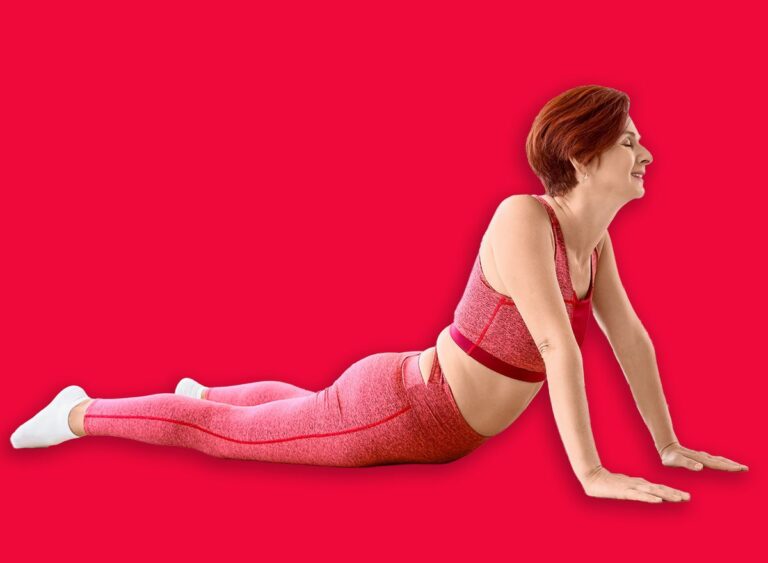
This exercise builds shoulder strength and mobility in the same flow. Down dog asks you to push through the floor and control your shoulder blades, creating stability overhead. Cobra opens the front of the body and brings the chest forward, stretching the front of the shoulder while keeping it active. Move slowly and let each position feel useful rather than rushing through the reps.
The goal is to strengthen the shoulders through movement, not just during a fixed hold. As you move from down dog to cobra and back, your shoulders guide the path while your core stabilizes. This teaches your shoulder to work in ranges of motion you actually use every day—not just static positions.
How This Exercise Works
Perform 2 to 3 sets of 6 to 8 reps, moving smoothly from down dog to cobra and back. Move through a range that feels smooth through your shoulders. For variations, try holding down dog for time, holding cobra for time, or moving from plank to down dog and back. Each variation has a slightly different balance of strength and mobility work, so you can adjust based on what your shoulders need that day.
Shoulder Halos: Building Joint Control
Halos work best when they’re slow enough to feel. As the weight moves around your head, your shoulders guide the path, and your core keeps your body steady. It’s a great drill for building joint control with a lighter load. Keep the circle close and stay tall, making each direction look the same.
The movement challenges your shoulder in multiple planes at once. Your shoulders have to control the weight moving up and around, while your core stays engaged to keep you from leaning. This is different from pressing movements and trains a quality of control that helps prevent injury.
Reps and Variations
Perform 2 to 3 sets of 5 to 8 reps per direction—both clockwise and counterclockwise around your head. You can use a lighter weight, try tall-kneeling halos, or half-kneeling halos if you need to adjust difficulty. Keep the weight close to your head and move slowly. Speed tempts you to use momentum, which defeats the purpose of the exercise.
Why Joint Control Matters
This exercise teaches your shoulder to control movement in all directions while your core stays stable. It’s less about moving heavy weight and more about moving weight smoothly through many angles. That’s exactly what your shoulder needs to stay healthy and functional. The control you build doing halos transfers to daily movement like putting dishes away or reaching for objects above your head.
Programming Your Shoulder Sessions
Home shoulder training works best when the reps feel controlled and repeatable. Use these exercises three to four days per week, especially on days when your shoulders need focused attention. Start with light resistance and smooth movement, then add more reps or a slightly heavier weight once the exercises feel steady.
The progression is simple: first master the movement pattern, then increase reps, then add load. This order builds durability and reduces injury risk. You should notice a difference fairly quickly—within two to three weeks, reaching, pressing, carrying, and daily movement should feel more confident. The overhead work becomes easier, and you have more stability during everyday tasks.
Frequently Asked Questions
Do I need expensive equipment for shoulder training at home?
No. You need a light band and one dumbbell, plus a little space. Home exercises offer better control over how your shoulder, upper back, and core work together than gym machines.
How many reps should I do for each exercise?
Band pull-aparts: 2 to 3 sets of 12 to 15 reps. Half-kneeling press: 2 to 3 sets of 8 to 10 reps per side. Down dog to cobra: 2 to 3 sets of 6 to 8 reps. Shoulder halos: 2 to 3 sets of 5 to 8 reps per direction.
How often should I do these shoulder exercises?
Use these exercises three to four days per week. Start with light resistance and smooth movement, then add more reps or a slightly heavier weight once the exercises feel steady.
