
Key takeaways
- Hip abductor torque declines statistically significantly with age, a physiological reality that directly correlates with reduced lateral balance, slower “Timed Up & Go” performance, and dramatically higher fall risk.
- The bridge hold test emerged from decades of gerontological research seeking simple, reproducible assessments that predict functional outcomes without expensive equipment or specialized facilities.
- Fitness professionals and geriatric specialists recommend baseline bridge hold testing for all adults entering their sixties, with retesting every 6–12 months to track functional trajectory.
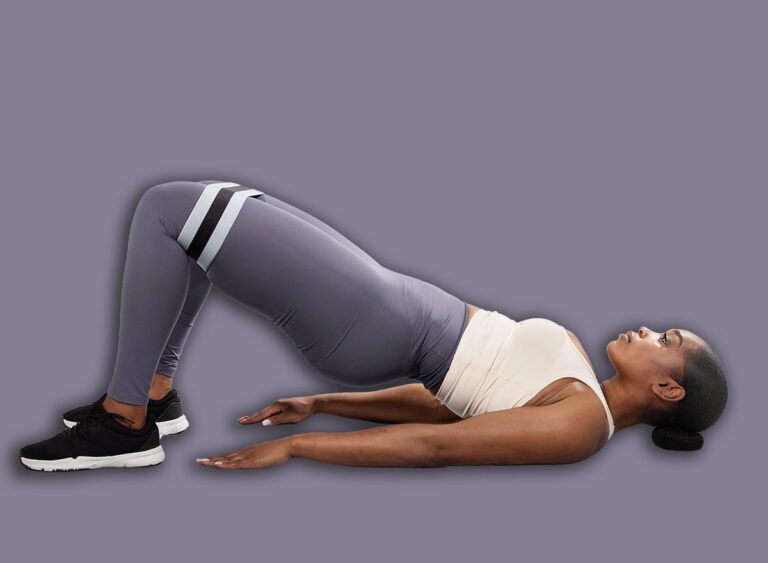
Holding a bridge position for 60 seconds or longer after age 60 signals strong core strength and excellent posterior chain endurance—a clinical benchmark that separates functional independence from deconditioning in older adults. The bridge hold test, validated across peer-reviewed aging studies, has become a quick, equipment-free assessment that reveals whether your body can handle daily demands like climbing stairs, rising from chairs, and maintaining posture without fatigue. For millions of adults entering their seventh decade, this single measure predicts mobility, fall risk, and quality of life more reliably than age alone.
The 60-Second Threshold: What Clinical Standards Actually Show
Clinical testing guidelines classify bridge holds into three tiers: 60 seconds or more indicates strong core strength, 30–60 seconds represents average performance, and anything under 30 seconds signals weakness that warrants intervention. This 60-second benchmark matters because it distinguishes those who can manage everyday movement patterns—lifting groceries, walking without lower back strain, standing during extended activities—from those at elevated risk for chronic pain and falls. The test activates the entire posterior chain simultaneously: glutes, hamstrings, lower back, and deep core stabilizers all fire together, mirroring the exact muscular patterns required in real-life functional movement.
Researchers emphasize that glute activation during bridge work depends entirely on execution technique. To maximize engagement, performers must press firmly through their heels while maintaining a neutral spine; pushing through the toes or relying on momentum shifts the workload to the lumbar spine instead of the glutes, defeating the purpose and increasing injury risk. This heel-driven approach ensures the glutes—not the lower back—become the primary movers, a distinction especially critical for adults over 50 where spinal degeneration is common and stability is paramount.
Why Posterior Chain Strength Becomes Non-Negotiable After 60
Hip abductor torque declines statistically significantly with age, a physiological reality that directly correlates with reduced lateral balance, slower “Timed Up & Go” performance, and dramatically higher fall risk. This decline in hip abduction power—driven largely by weakening of the gluteus medius, the outer glute muscle—is one of the primary mechanical drivers of reduced mobility in aging populations. When the gluteus medius weakens, the entire kinetic chain destabilizes, forcing compensation patterns that cascade through the knees, hips, and lower back.
The stakes extend beyond simple movement quality. Adults with weak posterior chains show significantly slower performance in functional mobility tests, struggle with stair climbing, and face compounded risk during balance-challenging situations like walking on uneven surfaces or recovering from a stumble. For those over 60, maintaining glute and hamstring strength is directly linked to independence, reduced hospitalization rates, and the ability to live without assistance—making the bridge hold test a revealing snapshot of functional longevity.
Single-Leg Exercises Outperform Bilateral Work for Aging Adults
Strength and conditioning experts increasingly recommend mixed protocols combining bilateral (two-leg) and single-leg bridge variations, with single-leg work showing superior results for trunk stability and hip strength in older populations. Single-leg exercises demand greater neuromuscular coordination and force production per side, forcing the stabilizer muscles to work harder and more realistically mimicking the asymmetrical demands of daily life—reaching for objects while standing on one leg, navigating stairs, or recovering from a trip. Research comparing active older adults shows that those incorporating single-leg movements achieve faster “Timed Up & Go” times and report greater confidence in balance-dependent activities.
The recommended dosage for seniors rebuilding strength is 2–3 sets of 12–15 reps per side, performed twice weekly, with no added weight necessary during initial phases. The key principle is slower, controlled movement that deepens muscle engagement rather than rapid repetitions that rely on momentum. Even bodyweight-only protocols produce measurable strength gains within 4–6 weeks when executed with proper form and adequate recovery between sessions.
Chair-Based Progressions Accelerate Results for Deconditioned Seniors
Clinical researchers have documented that specific chair exercises—Sit-to-Stands, Chair-Supported Hip Extensions, and Seated Banded Hip Abductions—restore glute strength faster than traditional squats for adults over 60, particularly those with joint concerns or balance limitations. A chair provides immediate stability, reduces fall risk, and allows older adults to focus entirely on glute activation without compensatory movement patterns. The prescribed protocol involves 3 sets of 15–25 second holds with 45 seconds rest between sets, emphasizing driving through the heels to engage the posterior chain.
Monster walks—performed with or without a resistance band—and step-up exercises represent the highest-activation movements for gluteus maximus strength, with step-ups generating over 100% of maximum voluntary isometric contraction (MVIC) in research measurements. These bilateral exercises exceed deadlifts and hip thrusts in glute activation efficiency, making them the most time-efficient choice for seniors seeking maximum strength gains per training session.
The Evolution of Strength Testing in Aging Populations
The bridge hold test emerged from decades of gerontological research seeking simple, reproducible assessments that predict functional outcomes without expensive equipment or specialized facilities. Unlike complex biomechanical labs requiring force plates and motion capture, the bridge test requires only a floor and a timer, making it accessible to clinics, gyms, and home environments worldwide. This democratization of testing has shifted how aging adults and their healthcare providers understand fitness—moving away from abstract metrics like BMI toward concrete, functional benchmarks that directly correlate with independence and quality of life.
Over the past 15 years, strength training protocols for older adults have shifted dramatically from low-resistance, high-repetition paradigms toward heavy-to-very-heavy resistance training, with research documenting that older adults consistently achieve increases of 0.5–8.5% in maximal force per training session when properly loaded. This evidence-based pivot has validated what elite aging athletes have known: older muscles respond robustly to appropriate stimulus, provided recovery and technique remain optimized.
What Comes Next: Monitoring Your Posterior Chain Strength
Fitness professionals and geriatric specialists recommend baseline bridge hold testing for all adults entering their sixties, with retesting every 6–12 months to track functional trajectory. Those falling below 30 seconds should immediately begin progressive strengthening protocols; those in the 30–60 second range benefit from single-leg progressions and advanced variations; those exceeding 60 seconds should maintain current capacity while adding lateral movements like monster walks to address the often-neglected gluteus medius.
The bridge hold test represents far more than a simple fitness metric—it reveals whether your body possesses the mechanical foundation for independent living, pain-free movement, and active aging. For adults over 60, holding that position for 60 seconds or longer signals that your posterior chain remains robust enough to support the demands of a full, functional life.
