
Key takeaways
- Shake Shack’s Single Hamburger earned its top ranking from nutrition experts due to its 100% all-natural Angus beef sourced from humanely raised cattle in the United States.
- BurgerFi distinguishes itself through its “Never-Ever” program, which guarantees that all-natural Angus beef patties are free of antibiotics, hormones, chemicals, steroids, fillers, additives, and preservatives.
- The elimination of artificial preservatives carries particular significance for consumers following restrictive diets, including Low-Carb , ketogenic, and food-intolerance-focused eating plans.
- For home cooks seeking to replicate preservative-free burgers outside restaurant environments, rolled oats serve as a clean-label binder to replace commercial fillers that often contain preservatives.
Five registered dietitians have identified Shake Shack’s Single Hamburger as the healthiest fast-food burger option available, marking a significant shift in how major restaurant chains approach ingredient transparency and food safety. The designation reflects a broader industry movement toward eliminating artificial preservatives from burger patties, a practice that distinguishes premium chains from mass-market competitors. These five chains—Shake Shack, In-N-Out Burger, BurgerFi, Five Guys, and Red Robin—have all committed to serving burgers made without artificial preservatives, fillers, or additives.
Dietitian-Vetted Burgers Lead the Preservative-Free Movement
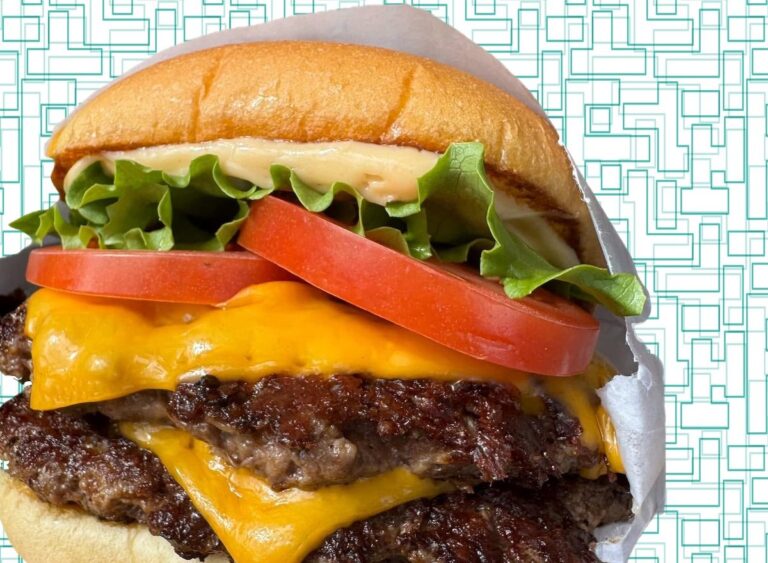
Shake Shack’s Single Hamburger earned its top ranking from nutrition experts due to its 100% all-natural Angus beef sourced from humanely raised cattle in the United States. The patty contains no hormones, antibiotics, or artificial preservatives, delivering 370 calories, 25 grams of protein, 18 grams of total fat (8 grams saturated), 24 grams of carbohydrates, 850 milligrams of sodium, and zero grams of fiber. This nutritional profile provides a high-protein, expert-vetted option for health-conscious consumers seeking to avoid the chemical additives common in conventional fast-food burgers.
Freddy’s Steakburgers earned recognition as the “overall healthiest burger” option in another dietitian assessment, with its Single Steakburger containing hand-formed patties free of preservatives and fillers. The burger delivers 380 calories, 24 grams of protein, 12 grams of fat, 30 grams of carbohydrates, and zero grams of fiber, making it a low-calorie, high-protein alternative for those prioritizing clean ingredients without chemical shelf-life extenders.
Fresh, Never-Frozen Standards Eliminate Preservative Requirements
In-N-Out Burger has maintained its commitment to zero artificial preservatives through an operational model that eliminates the need for chemical additives entirely. The chain uses 100% USDA ground chuck beef with no additives, fillers, or preservatives, delivering fresh patties daily or every other day through company-owned patty-making facilities. This vertical integration ensures complete quality control and allows the chain to operate without microwaves or freezers, a practice maintained since its founding.
Five Guys enforces a similar fresh-beef standard by hand-preparing burgers daily with 100% fresh beef that is never frozen and contains no preservatives or fillers. The chain’s Little Cheeseburger delivers 280 calories (burger only), 24 grams of protein, and 12 grams of fat, demonstrating how fresh-preparation methods yield high-protein meals without artificial enhancements. Culver’s follows the same operational philosophy, using a blend of chuck, sirloin, and plate beef sourced from Midwest-raised cattle, with patties made to order and containing no fillers, additives, or preservatives.
Premium Sourcing Programs Set Industry Standards
BurgerFi distinguishes itself through its “Never-Ever” program, which guarantees that all-natural Angus beef patties are free of antibiotics, hormones, chemicals, steroids, fillers, additives, and preservatives. The program requires cattle to be free-range, raised vegetarian, and treated humanely with zero exposure to growth stimulants, establishing a comprehensive approach to ingredient quality that extends beyond beef sourcing alone. Founded in 2011, BurgerFi positioned itself as a gourmet alternative by avoiding the artificial preservatives standard in lower-quality fast food.
Red Robin’s approach emphasizes domestic sourcing and USDA inspection standards, using all-natural, 100% USDA-inspected beef free of preservatives, artificial ingredients, and additives. While not certified organic, Red Robin’s beef sourcing from familiar cuts like chuck, round, and sirloin meets specific criteria for consumers committed to high-quality meat without chemical preservation methods.
The Preservative-Free Advantage for Restricted Diets
The elimination of artificial preservatives carries particular significance for consumers following restrictive diets, including Low-Carb, ketogenic, and food-intolerance-focused eating plans. Artificial preservatives such as sodium benzoate and potassium sorbate, common in processed fast-food fillers, can trigger adverse reactions in sensitive individuals and add unnecessary sodium and chemical compounds to otherwise clean-label meals. These five chains address this concern by maintaining operational standards—fresh delivery, no freezers, made-to-order preparation—that make chemical preservation unnecessary.
For individuals managing macronutrient ratios in ketogenic or low-carb protocols, the high-protein profiles of these burgers (24 to 25 grams per patty) combined with moderate carbohydrate counts make them practical meal options that do not compromise dietary adherence through hidden additives. The absence of fillers also means consumers receive pure beef protein rather than extended products that dilute nutritional density.
Home Cooking Alternatives for Clean-Label Burger Preparation
For home cooks seeking to replicate preservative-free burgers outside restaurant environments, rolled oats serve as a clean-label binder to replace commercial fillers that often contain preservatives. The recommended ratio is no more than half a cup of rolled oats per one pound of extra-lean beef, allowing home cooks to maintain burger structure on the grill while avoiding chemical additives like sodium benzoate or potassium sorbate found in processed fillers. This substitution approach enables consumers to prepare burgers aligned with the same clean-ingredient standards maintained by premium restaurant chains.
How Fresh-Beef Operations Built Long-Term Industry Influence
In-N-Out Burger’s operational model, established through company-owned patty-making facilities and daily fresh delivery, demonstrated decades ago that fast-food burger chains could eliminate artificial preservatives through operational efficiency rather than chemical intervention. This model influenced the subsequent emergence of premium burger chains like Five Guys (founded in 1986), BurgerFi (founded in 2011), and Shake Shack (founded in 2004), each adopting similar fresh-beef, never-frozen standards as core brand differentiators. The cumulative effect shifted consumer expectations and industry norms regarding what “fast-casual” burger quality should entail.
Culver’s, operating primarily in the Midwest since 1984, maintained regional influence through its “ButterBurgers” concept and commitment to never-frozen beef sourced from local cattle, establishing precedent for regional chains to compete on ingredient quality rather than price alone. These chains collectively demonstrated that eliminating artificial preservatives was operationally feasible at scale, challenging the assumption that mass-market fast food required chemical additives.
Monitoring Clean-Label Expansion Across Restaurant Segments
The concentration of preservative-free burger options among premium and mid-tier chains raises questions about whether value-tier fast-food operators will adopt similar standards or continue relying on chemical preservation methods. Consumer demand for clean-label options, reflected in dietitian recommendations and social media discussion, continues to pressure larger chains to disclose ingredient sourcing and preservation methods transparently. The next significant development will be whether major national chains expand fresh-beef sourcing or whether the preservative-free segment remains concentrated among established premium operators.
These five chains have established that serving fresh burgers without artificial preservatives is operationally viable and marketable to health-conscious consumers. For individuals managing restrictive diets or seeking to eliminate artificial additives from their regular meals, these chains offer verified, dietitian-vetted options that deliver both nutritional density and clean-ingredient transparency.
