
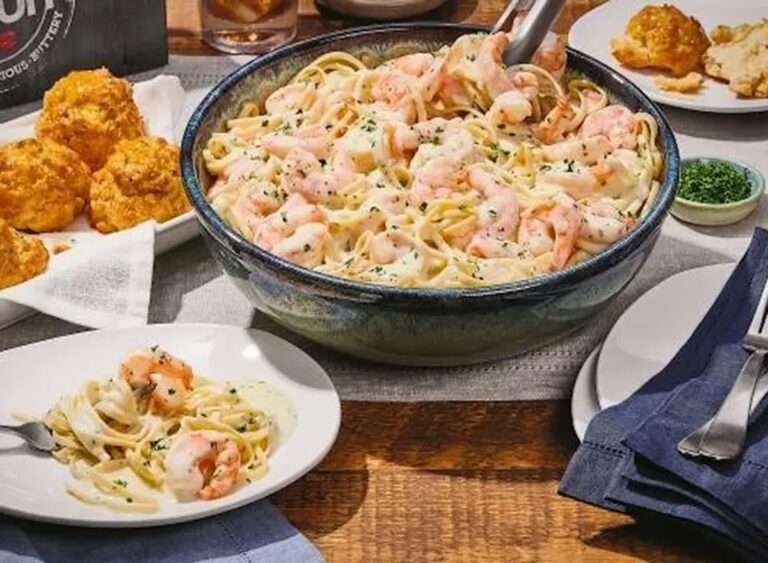
Olive Garden’s Seafood Alfredo contains 1,450 calories per serving—more than half the daily caloric intake for many diets—making chain restaurant seafood pasta dishes a critical case study for health-conscious diners navigating restaurant menus. Customer reviews across major seafood chains reveal stark differences in preparation methods, portion sizes, and nutritional profiles that significantly impact weight management and cardiovascular health. Red Lobster, Uncle’s Fish Market & Grill, and The Cheesecake Factory have emerged as top contenders for the best-executed seafood alfredo offerings, according to diner feedback and nutritional analysis.
Olive Garden’s Seafood Alfredo Dominates Market Share Despite Extreme Caloric Load
Olive Garden’s Seafood Alfredo stands as the most widely consumed restaurant seafood alfredo in the United States, yet it delivers 1,450 calories per serving with a macronutrient breakdown of 26% carbohydrates (96g), 56% fat (91g), and 17% protein (63g). The dish contains 55g of saturated fat, representing 275% of the daily recommended value, and 1,620mg of sodium at 70% of the daily value. This extreme caloric density reflects the heavy cream and butter-based sauce that defines traditional Alfredo preparation at high-volume restaurant chains.
The 92g net carbohydrate content in Olive Garden’s version—calculated from 96g total carbohydrates minus 4g fiber—represents 35% of the daily carbohydrate value, making the dish incompatible with Low-Carb and ketogenic diet protocols. For diners managing weight loss or cardiovascular health, the saturated fat content alone exceeds recommended daily limits in a single meal. This nutritional profile has driven significant consumer demand for lighter alternatives and substitution strategies across the restaurant industry.
Red Lobster and Uncle’s Fish Market Deliver Customer-Preferred Alternatives
Red Lobster’s Shrimp Linguini Alfredo has earned consistent praise from diners specifically for its soft shrimp texture and precisely balanced creaminess in the alfredo sauce, with spaghetti cooked al dente to prevent mushiness. Uncle’s Fish Market & Grill offers a Seafood Pasta featuring sautéed fresh fish and shrimp in alfredo sauce, described by patrons as a “creamy pasta loaded with” quality seafood. Both chains have positioned themselves as superior alternatives to Olive Garden by emphasizing fresh ingredient quality and proper cooking technique rather than maximum caloric density.
The Cheesecake Factory’s fettuccine alfredo has earned rave reviews from customers who specifically commend the pasta’s flavor and texture, establishing the chain as a top contender for alfredo quality across the restaurant industry. These customer preferences indicate that diners actively evaluate chain restaurants based on execution quality, seafood freshness, and sauce composition—factors that extend beyond simple calorie counting into the realm of culinary craftsmanship and ingredient sourcing.
Health-Focused Preparation Methods Reduce Calories by 70% Without Sacrificing Protein
Nutritionists and meal-prep specialists have developed a critical substitution strategy that replaces heavy cream and excessive butter with low-fat cottage cheese blended with 2% milk, reducing a shrimp alfredo dish to 550–600 calories while maintaining 45–50g of protein and limiting carbohydrates to 15–20g. This modification demonstrates that protein density can increase substantially while calories and fat decrease dramatically compared to traditional restaurant recipes, creating a high-protein, low-carb option compatible with weight loss and fitness nutrition protocols. A meal-prep version optimized for macro adherence contains 540 calories with 14.7g fat, 45.5g carbs, and elevated protein content suitable for daily dietary compliance.
The contrast between standard restaurant servings (1,450 calories) and lean alternatives (475 calories) illustrates the massive impact of portion size and sauce composition on nutritional outcomes. A lighter shrimp alfredo pasta serving contains only 475 calories with 24g fat, 35g carbs, and 25g protein—a macro split of 46% fat, 29% carbs, and 25% protein that makes the dish accessible for calorie-restricted diets. This 67% reduction in calories demonstrates that seafood alfredo need not be abandoned by health-conscious diners; rather, preparation method and ingredient selection determine whether the dish supports or undermines nutritional goals.
Traditional Recipes Establish Historical Baseline for Alfredo Sauce Composition
The traditional homemade shrimp fettuccine alfredo recipe yields 440 calories per serving with 11g fat and 58g carbohydrates, using 1 cup of half-and-half or heavy cream plus 6 tablespoons of Parmesan cheese as its foundation. This historical recipe serves as the cultural and culinary baseline for “Alfredo,” revealing that even traditional preparations rely heavily on dairy fats and refined carbohydrates. The evolution from homemade to chain restaurant versions shows dramatic escalation in caloric content, with Olive Garden’s version delivering more than three times the calories of a traditional home-cooked preparation.
Understanding this historical context clarifies why chain restaurants produce significantly higher-calorie versions: volume production demands stabilizers, emulsifiers, and excess cream to maintain consistency across hundreds of daily servings. The difference between 440 calories (traditional) and 1,450 calories (Olive Garden) reflects not just larger portions but fundamentally different sauce compositions optimized for shelf stability and standardization rather than nutritional efficiency.
Food Safety Standards and Cooking Temperature Ensure Quality Control Across Chains
Shrimp must reach an internal temperature of 145°F to be safe for consumption, a standard that directly impacts the quality differentiation between chain restaurants. Red Lobster’s customer reviews specifically praise the “soft shrimp” texture achieved through proper cooking technique, suggesting the chain consistently meets this safety threshold while avoiding overcooking that hardens the seafood. This food safety standard serves as a practical quality control metric that separates restaurants delivering properly cooked, tender shrimp from those producing rubbery, overcooked seafood.
The emphasis on soft, properly cooked shrimp in customer reviews indicates that diners actively evaluate restaurants based on cooking technique and seafood quality—factors that correlate directly with both food safety compliance and culinary execution. Chains that consistently achieve the 145°F target without exceeding it develop customer loyalty through superior taste and texture outcomes, creating a competitive advantage in the seafood pasta market segment.
Monitoring Nutritional Transparency and Menu Innovation in Seafood Alfredo Offerings
Chain restaurants face increasing pressure to provide detailed nutritional information for menu items, particularly as consumer demand for low-carb, high-protein, and calorie-controlled options continues accelerating. Red Lobster, Uncle’s Fish Market & Grill, and The Cheesecake Factory have positioned themselves competitively by delivering customer-preferred preparations that balance indulgence with perceived quality, yet none have publicly committed to developing lower-calorie seafood alfredo alternatives matching the 550-calorie range achieved through cottage cheese substitution. Future menu development will likely emphasize sauce innovation and portion control as chains respond to customer demand for healthier seafood pasta options.
Diners selecting seafood alfredo at chain restaurants now have specific, customer-validated options in Red Lobster and Uncle’s Fish Market & Grill that deliver superior execution compared to mass-market alternatives. The 67% caloric reduction achievable through cottage cheese substitution and proper portion control demonstrates that seafood alfredo can integrate into health-focused diets without complete elimination, provided diners understand preparation methods and make informed selections based on nutritional profiles rather than brand reputation alone.
