
Key takeaways
- Daily walking, strength training, protein intake, sleep, and calories management all contribute to belly overhang reduction—core exercises support these habits rather than replace them.
- The five morning exercises progress from controlled floor work to standing movements, engaging your abs, obliques, legs, and hips together for a complete routine.
- Perform the routine three to five days per week, keeping your first round controlled, and building a plan you can repeat consistently.
Morning Movement for Midsection Strength
A short session before the day gets busy can set the tone for activity and help your core stay engaged throughout the day. After 55, the workouts that become habits are usually the ones you can repeat without much thought or complicated setup. Morning sessions for belly overhang work because they build momentum early, and starting your day with movement already complete creates a psychological win that carries into better choices later.
Flattening belly overhang depends on several factors working together. Strength training, daily walking, protein intake, consistent sleep, and a calorie level you can sustain all contribute to fat loss. Core exercises fit into that larger picture—they give your midsection a functional role and help your body move more efficiently during fuller-body activities. That’s why a morning routine focusing on compound movements can do more for your belly overhang than isolated core work.
Beyond Crunches: Why These Exercises Work
Training Multiple Muscle Groups
Crunches train one narrow pattern: spinal flexion. The exercises below engage your abs, legs, hips, and upper body at the same time. This integrated approach makes a short session feel more productive because you’re recruiting larger muscle groups that use more energy and create a stronger signal for adaptation. When your core works as part of a larger movement, stabilizing your spine while your legs move or your arms work, it gets stronger while also building practical strength for daily life.
Easier to Repeat
Morning routines that stick are the ones you can do consistently without overthinking them. These exercises move from controlled floor work to standing and low-impact movements that let you adjust intensity as your body warms up. You can perform them in a small space, they require minimal equipment, and each one has variations you can use if you need to scale the difficulty down or up depending on how you feel that morning.
Controlled Floor Work
Dead Bug Heel Taps
This exercise teaches your core to stabilize your pelvis while you move one leg at a time. Your abs keep your lower back flat against the floor, which means they have a clear, functional job without the neck strain that comes with crunches. Start with short taps and build your range as your lower back stays steady. Keep the movement controlled and small at first.
Perform 2 to 3 sets of 8 to 10 reps per side. If you need to modify, try single-leg heel taps or perform the taps over a smaller range. The key form cue: keep the tap short enough that your lower back never leaves the floor.
Chair Sit-to-Stand
Standing from a chair recruits large leg muscles, which helps a short morning session feel more productive. Your core helps stabilize your torso as you rise and lower with control, so you’re training your midsection as part of a movement pattern you do every day. Use a sturdy chair and make each rep smooth from the seat all the way to standing without rocking for momentum.
Perform 2 to 3 sets of 8 to 12 reps. You can scale this by using your hands for assistance, slowing down the movement, or adding a pause at the top. Press through your feet and stand tall to complete each rep.
Standing and Rhythmic Work
Cross-Body Knee Drive
As your knee travels across your body, your abs and obliques guide the movement while your standing leg keeps you balanced. This targets the waist more directly than many other core exercises. The setup is quick, the pace is easy to adjust, and the movement has a more athletic feel without impact. Keep your chest tall and make each knee drive crisp.
Perform 2 to 3 sets of 8 to 12 reps per side. Variations include supported cross-body knee drive if you need balance assistance, a smaller range of motion, or a slower pace.
Low-Impact Jumping Jacks
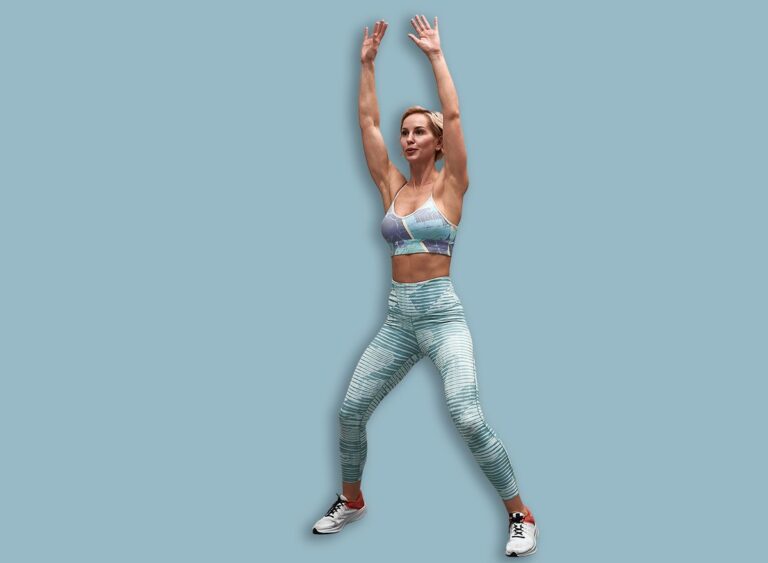
Adding rhythm to your session changes how it feels. Low-impact jumping jacks raise your heart rate while keeping one foot on the floor at all times, which makes the movement easy to scale. Your arms and legs work together while your core keeps your posture tall. Start at a steady pace and pick up speed once your breathing feels controlled.
Perform 2 to 3 sets of 30 to 45 seconds. You can modify by doing slower step jacks, arms-only jacks, or scaling up to full jumping jacks once you’ve warmed up. Keep the movement light on your feet and stay tall through your chest.
Finishing With Plank Shoulder Taps
When you want steady core tension with a small amount of movement, plank shoulder taps deliver both. Each shoulder tap creates a slight weight shift, so your midsection has to stay braced as one hand leaves the floor. Move slower than feels necessary—clean taps build more abdominal strength than rushing through reps and letting your hips sway.
Perform 2 to 3 sets of 8 to 12 taps per side. Variations include an incline plank shoulder tap, a wall shoulder tap, or a simple plank hold. The most important form point: keep your hips as still as possible during each tap.
Making Change Visible
A short morning session builds momentum, but visible change comes from what you repeat throughout the week. Use these exercises three to five days per week, then support them with daily walking, additional strength training, and meals that help you manage calories without feeling drained. A short morning routine works when it feels easy to start and still counts as real work.
Consistency across weeks and months matters far more than the intensity of any single session. Keep your first round smooth, add effort as your body warms up, and build a plan you can repeat the next day.
Source: Eat This Not That
Frequently Asked Questions
How often should I perform these belly overhang exercises?
Perform these exercises three to five days per week to see visible change. Morning sessions work best when supported by daily walking, additional strength training, and meals that help you manage calories without feeling drained.
Why are these exercises better than crunches for belly overhang?
These exercises engage your abs, legs, hips, and upper body together, recruiting larger muscle groups that use more energy and create stronger signals for adaptation. Crunches train only spinal flexion, which is a narrow movement pattern.
Can I modify these exercises if I need to make them easier?
Yes, every exercise has variations. Dead bug heel taps can be performed with smaller ranges or single legs. Chair sit-to-stand can use hand assistance. Cross-body knee drive can be supported. Low-impact jumping jacks can use slower step versions or arms-only. Plank shoulder taps can be performed as incline versions or wall taps.
