
Key takeaways
- Standing exercises build leg strength faster than machines because they work through your body's full natural range of motion while developing balance simultaneously.
- Chair squat progression—from high furniture to bodyweight—lets your strength catch up gradually to deeper ranges of motion.
- Single-leg exercises reveal strength imbalances between your legs and force stabilizer muscles to work, building functional strength for real-world tasks.
Gym machines promise safety and structure, but they impose a structural limit that matters most after age 70: the machine’s range of motion, not your body’s, dictates how far you move. A trainer who works with clients over 70 reports that those who restore leg strength most effectively skip the machines altogether and work with bodyweight standing exercises at home instead, grinding away consistently. The key difference isn’t equipment or intensity—it’s how your body actually moves through daily life.
Why Standing Exercises Beat Machines After 70
Machines move only as far as their mechanical design allows. Your body, when working against gravity alone, can access the full range that your joints permit. After 70, having access to this full range is the difference between rising confidently from a low chair and struggling, between climbing stairs steadily and favoring one leg to protect the other. Machines train strength within their mechanical window, but they skip the end-ranges of motion where real daily function actually lives.
Bodyweight standing exercises eliminate this gap. Your body works through a complete range while simultaneously building the balance to control that movement. The strength you develop at home translates directly to daily tasks: kneeling down to pick something up, rising from a car seat, stepping up onto a curb. Machines simply cannot deliver this transfer because machines, by design, move in fixed paths.
The Range-of-Motion Problem and Everyday Movement
What Machines Leave Behind
Squat depth is among the first ranges of motion to disappear with age. At 50, dropping into a deep squat requires no thought. By 70, the sequence of loss becomes: first, difficulty getting down to and up from the floor; then, trouble with low chairs; finally, problems settling comfortably into a car seat. Each of these is the same fundamental movement, just performed at progressively higher heights. Restoring your squat depth restores your ability to function across multiple daily scenarios.
The same principle applies to bending and reaching for objects. When you reach for something on a low shelf or pick an item up from the floor, tight hamstrings force most people to round their lower back rather than hinge at the hips. This compensatory pattern causes pain over time and progressively limits how much you can actually accomplish. Gym machines cannot fix this because they move in fixed, predetermined paths. Your body needs to learn variable patterns—reaching at different angles and depths—the way machines cannot teach.
Balance as Functional Strength
After 70, balance and strength are linked, not separate. The strongest legs in the world are useless if you cannot control them while standing on one foot and reaching for a coffee cup. Standing exercises force your stabilizer muscles to work every single repetition. When you shift your weight onto one leg during a calf raise or lunge, your core and the smaller muscles throughout your hips and ankles fire continuously to keep you upright. Machines eliminate this demand by locking your body into place and controlling movement for you. The result: you develop impressive strength on the machine that simply does not transfer to the real world.
Chair Squats: Building From Furniture to Bodyweight
Progression That Teaches Your Body
The chair squat solution works through strategic progression. Begin with a bar stool or other high surface. Push your hips backward and downward with control, descending until you lightly touch the seat—just barely contact it. Control the descent rather than simply dropping. Once this height feels solid and stable, transition to a kitchen chair. After that, move to a low step. Finally, remove the chair entirely and perform a full bodyweight squat to the floor. This progression works because your strength improves alongside your available range. Your nervous system gradually learns that moving deeper is safe as your muscles grow strong enough to handle that depth. Rushing this progression out of impatience defeats the purpose—patience here pays dividends because you’re rebuilding a range of motion your body has been steadily losing for years.
Lunges and Single-Leg Training for Complete Movement
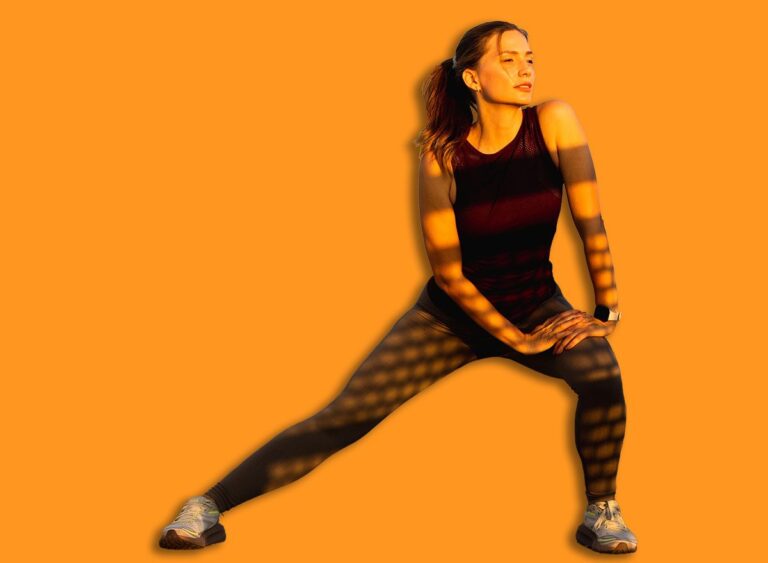
Truly strong legs move forward and backward, but also side to side. Forward lunges build your quads and glutes; stepping sideways strengthens your adductors and inner thigh muscles, which are critical for preventing knee injuries and stabilizing your hips when you step on uneven ground. Single-leg lunges are particularly valuable because they force each leg to carry the full load equally, instantly revealing which leg is weaker and needs additional focus. Start lunges with a short range of motion—step forward only as far as you can control—and increase your lunge depth as your strength and balance improve. Depth is never the goal; control through a full range is always the priority.
The Good Morning for Hip Strength
The good morning exercise trains your hamstrings and glutes in the exact movement pattern you need in real life: the proper hip hinge. When your hamstrings are tight, your lower back compensates by rounding when you bend, which causes pain and progressively limits your function. The good morning retrains these muscles. Stand upright and keep your chest open and facing forward. Then push your hips backward as if you’re opening a car door with your rear end. Your knees can bend slightly, but the primary movement is your hips going back, not your torso dropping down. Hold this position, then drive your hips forward to return to standing. This single exercise reduces lower back pain and increases overall body strength because you’ve taught your posterior chain to work correctly, whether you’re picking up groceries, tying your shoes, or retrieving items from low surfaces.
Single-Leg Exercises: Advanced Strength and Balance
After building a foundation with two-leg exercises, single-leg variations add another dimension: strength while balancing. Single-leg chair squats require your muscles to lift roughly twice the amount of weight while simultaneously keeping you stable on one foot. The exercise often reveals an imbalance—one leg is frequently much stronger than the other—which shows you precisely where to focus additional work. Start with a significantly higher chair than you would use for standard two-leg squats, since the demand is roughly double. Cut your repetition count in half as well.
Single-leg calf raises follow the same principle. Hold onto a wall or countertop for safety. Rise up onto the ball of one foot, pause at the top of the movement, then lower back down. Your calf muscles strengthen, but your ankle stabilizers and core also fire to keep you balanced. These single-leg variations develop the kind of functional strength that matters in everyday scenarios: carrying groceries up stairs, stepping confidently off curbs, or maintaining your balance while reaching for something on a high shelf.
Why Daily Practice Outperforms Occasional Gym Visits
According to Eat This Not That’s report, the trainer who works with older clients found that most clients over 70 who successfully restore their leg strength are those who consistently practice at home, not those who visit a gym sporadically. Your muscles and nervous system respond to regular, moderate stimulus better than they respond to infrequent intense efforts. Performing these exercises three to five times each week at home produces superior results compared to sporadic machine work at a facility. Consistency sends a daily signal that your legs need to be strong and stable, and your body adapts accordingly. Machines cannot compete with this signal because machines, by structural design, provide only a narrow window of training stimulus.
Source: Eat This Not That
Frequently Asked Questions
Why are standing exercises better than gym machines for people over 70?
Standing exercises allow your body to move through its full natural range of motion while building balance at the same time, whereas machines limit movement to fixed paths and eliminate the balance challenge.
How do you progress with chair squats?
Start with a high surface like a bar stool, then move to progressively lower furniture—a kitchen chair, then a low step—before doing full bodyweight squats on the ground.
Why is the good morning exercise valuable for people over 70?
The good morning teaches your hamstrings and hips to hinge properly, preventing the lower back pain that occurs when tight hamstrings force your spine to compensate.
