
Key takeaways
- Standing exercises strengthen legs, hips, calves, and core simultaneously while challenging balance better than treadmills.
- Marching and side steps train your body to move in multiple directions, improving stability and functional strength for everyday walking.
- You can perform standing exercises at your own pace, making it easier to build endurance safely without machine constraints.
- Pairing standing exercises with regular walking produces the fastest results for rebuilding endurance in adults over 65.
Walking endurance—your ability to cover distance on foot without tiring—is a reliable marker of overall health. If you’re unable to walk far without exhaustion, your body is sending a signal that changes are needed. After ruling out any underlying medical causes, targeted exercise can restore this capacity.
According to Eat This Not That, Denise Chakoian, a Rhode Island Certified Fitness Trainer and owner of Core Cycle and Fitness LaGree with more than 16 years of experience training people across all fitness levels, recommends standing exercises over treadmills for adults over 65 seeking to rebuild walking endurance.
Why Walking Endurance Matters
Your ability to walk a meaningful distance without tiring reveals important truths about your fitness and health. Walking demands cardiovascular strength, powerful leg and hip muscles, spinal stability, and balance—qualities that tend to decline with age. For adults past 65, your walking capacity directly supports independence in everyday activities, from errands to social visits. A noticeable drop in walking distance is a signal that your legs, hips, and core need focused training.
Standing Exercises Outperform Treadmills
Chakoian explains that standing exercises target the exact muscles you activate during every step. “Standing exercises work the specific muscles you rely on every time you walk. They strengthen the legs, hips, calves, and core at the same time. They can also challenge balance in a way a treadmill may not,” she tells us.
The fundamental difference is this: treadmills move a belt beneath your feet while you remain relatively stationary relative to the machine. Standing exercises require you to move your entire body through space, which recruits stabilizer muscles and demands constant balance adjustment. For adults over 65, this active balance work is critical for preventing falls and walking confidently on uneven surfaces outdoors.
Comprehensive Muscle Engagement
A treadmill primarily moves your legs in a forward direction on a fixed path. Standing exercises work your legs, hips, calves, and core together in the coordinated pattern you actually use when walking on varied, real-world terrain. This comprehensive activation builds functional strength that directly transfers to everyday walking.
Active Balance Training
Treadmills provide motorized support that moves predictably beneath you. Real walking and standing exercises require you to actively maintain balance with each step, engaging stabilizer muscles around your ankles, hips, and core. “They can help improve stability with each step,” Chakoian notes. This balance demand is something no treadmill replicates, yet it’s essential for safe, confident walking in the real world.
Self-Paced Exercise
You perform standing exercises at whatever speed suits your current fitness level. “You can also move at your own pace without worrying about keeping up with a treadmill belt. For some older adults, that makes it easier to exercise a little longer and build stamina safely,” Chakoian explains. Self-directed pace reduces injury risk and allows gradual endurance building without the pressure of matching a machine’s speed.
Marching for Forward Motion
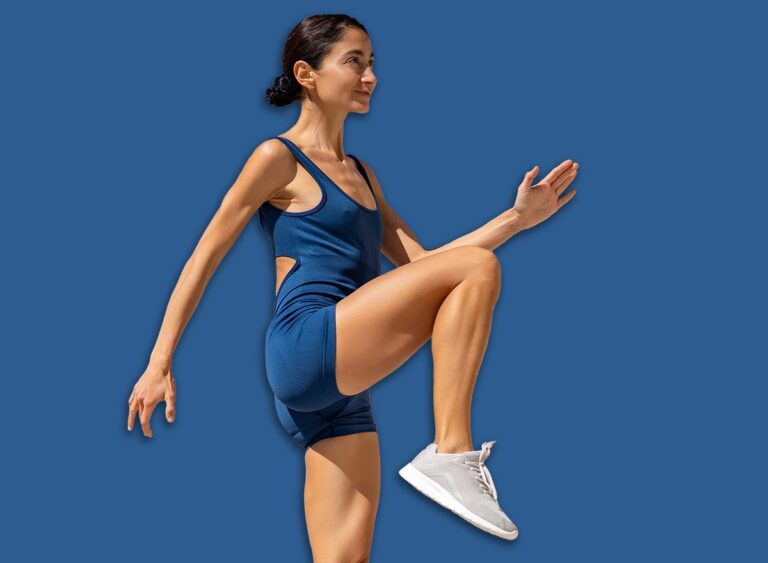
Marching strengthens your hip flexors, quadriceps, and calves while simultaneously building aerobic capacity. By repeatedly lifting your knees in a controlled manner, you condition the muscles used in forward walking and train your body to sustain elevated effort over time. This exercise mimics the core motion of walking while allowing you to work at your own pace.
Side Steps for Lateral Stability
Side steps engage your outer hip muscles and thighs, areas that forward walking alone does not fully develop. Stronger lateral hip stability improves overall balance and corrects the asymmetrical weaknesses that can result from exclusive focus on forward-only movement. This lateral strength is essential for walking confidently in any direction and reacting quickly to obstacles.
Combining Exercises With Regular Walking
The fastest results come from pairing standing exercise sessions with regular walking. Chakoian emphasizes that “pairing these exercises with regular walking can be particularly beneficial for boosting walking endurance.” Standing exercises provide the targeted strength and balance training, while regular walking on natural terrain builds aerobic capacity and trains your body to sustain distance. Together, they restore the walking endurance that makes daily life more independent and enjoyable.
Source: Eat This Not That
Frequently Asked Questions
Why are standing exercises better than treadmills for walking endurance after 65?
Standing exercises work the specific muscles you use in walking—legs, hips, calves, and core—while also challenging balance in ways treadmills cannot. Unlike treadmills, standing exercises require you to move your entire body through space, demanding balance adjustments with each step.
What are the main standing exercises recommended for rebuilding walking endurance?
Denise Chakoian recommends marching and side steps. Marching strengthens the hip flexors, quadriceps, and calves used in forward walking, while side steps engage your outer hip muscles and thighs to improve lateral stability.
How should I combine standing exercises with regular walking for best results?
Standing exercises provide targeted strength and balance training, while regular walking builds aerobic capacity and trains your body to sustain distance. Pairing both approaches together is particularly beneficial for boosting walking endurance.
