
Key takeaways
- Standing core exercises train your midsection to work with your entire body, not in isolation like crunches.
- Six exercises using bands, dumbbells, and carries build functional strength for daily tasks like carrying, lifting, and reaching.
- Train three to four days per week, starting light and short, then progress by adding weight or time as your posture stays steady.
- Each exercise covers a different core demand: anti-rotation, uneven load carries, loaded movements, and controlled rotation.
After 60, your core needs training that goes beyond floor exercises. Standing work recruits your midsection through positions that match how your body actually functions—walking, lifting, rotating, and maintaining posture under load. Crunches have dominated core training for decades, but they isolate your abs from the rest of your body. Standing work integrates your midsection with your entire movement pattern, making the strength you build translate directly to carrying groceries, reaching overhead, or shifting weight on one side.
When you train your core in standing positions, your abs take on a bigger role in everyday function. Your midsection stabilizes your spine, helps you carry weight, controls rotation, and keeps your posture steady while your arms and legs move. Work with bands, dumbbells, and carries teaches your core to brace under real-world conditions instead of performing repetitive floor reps.
Why Standing Core Work Beats Isolation After 60
Clients who move core training off the floor report feeling their midsection work more effectively during daily life. Carries, presses, marches, and loaded squats make training feel practical because the abs stay engaged with the rest of your body. The work feels genuinely strong without requiring another endless set of crunches.
Training frequency works best at three to four days per week, either as a dedicated core session or as part of a full-body routine. Start with lighter weights and shorter carries, then progress by adding time or load once your posture stays steady throughout each rep.
Pallof Press: Anti-Rotation Core Training
The Pallof press trains your core through resisting rotation—one of the most useful midsection jobs. Anchor a band at chest height and hold the other end with both hands at your sternum. The band pulls you toward the anchor, and your abs have to keep your torso facing forward. That steady resistance builds the control you need when you carry groceries one-handed, reach across your body, or shift weight side to side during the day.
Perform 2 to 3 sets of 8 to 12 reps per side, keeping the press slow and pausing with your arms extended. The movement trains your abs, obliques, deep core, shoulders, and glutes. Keep your torso facing forward as the band pulls from the side—this is where the real work happens.
Best variations for this exercise:
- Half-kneeling Pallof press for extra core demand
- Lighter-band version for movement quality
- Pallof press hold to build isometric strength
Building Real Midsection Strength With Carries
Carries teach your core to stay stable under real-world loads. Unlike isolated movements, a carry involves your entire body working together—grip, shoulders, hips, and especially your midsection to maintain upright posture.
Suitcase Carry
Hold a single dumbbell at your side, and your body immediately wants to lean away from the weight. This gives your obliques a clear job: keep you upright. The suitcase carry trains you to walk tall under an uneven load without tilting. Perform 2 to 3 carries of 20 to 40 seconds per side, using a weight that challenges your posture without pulling you out of alignment. Keep your ribs stacked over your hips and maintain tall posture throughout.
Variations to scale this exercise:
- Lighter suitcase carry
- March-in-place suitcase carry
- Shorter-distance carry
Farmer’s Carry
Pick up two equal weights and walk with clean posture—that’s the farmer’s carry. Nothing fancy, just heavy and honest. Your abs help hold your rib cage and pelvis stable while your grip, shoulders, and hips stay strong through each step. After 60, this movement builds midsection strength that transfers directly to carrying bags, boxes, or anything else you grab in daily life. Perform 2 to 3 carries of 20 to 45 seconds. Reduce the weight, shorten the distance, or march in place if needed while you build tolerance.
Variations to scale this exercise:
- Lighter farmer’s carry
- Shorter carry
- March-in-place farmer’s carry
Loaded Movements That Integrate Core and Lower Body
Front-loaded positions demand core stability, making these exercises clean options for full-body core work.
Goblet Hold Marching
Hold a dumbbell at your chest and march in place, lifting each knee deliberately. The weight at your chest forces your abs to brace, while each knee lift challenges your balance and hip control. This move delivers core work that also feels athletic and practical—it’s not just ab isolation. Perform 2 to 3 sets of 20 to 40 seconds, staying tall as your knees lift instead of leaning back. You’ll train your abs, hip flexors, glutes, quads, and upper back.
Variations to progress this exercise:
- Bodyweight marching
- Lighter goblet hold march
- Supported goblet march
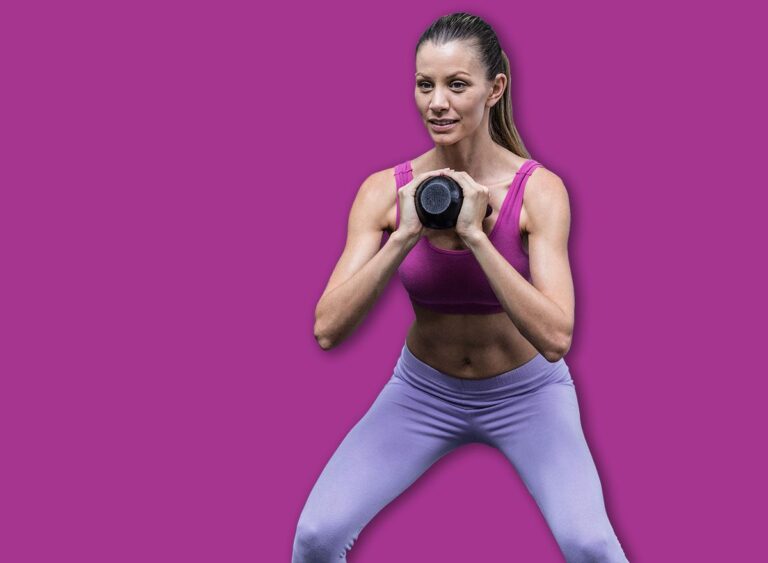
Goblet Squat
Strength in the midsection and strength in the lower body meet in the goblet squat. Hold the weight at your chest and squat down, letting your abs help keep your torso stable as your hips and knees bend. The weight in front requires core engagement to prevent your torso from folding forward. Perform 2 to 3 sets of 8 to 12 reps, keeping the weight close to your chest through the entire movement. Choose a load that lets you squat smoothly and stand tall without compensation.
Variations to scale this exercise:
- Bodyweight squat
- Box squat
- Lighter goblet squat
Rotation: The Movement Your Core Needs
Rotation is often left out of standing core plans, but it belongs in a complete midsection strategy. The dumbbell wood chop trains your abs and obliques as the weight moves across your body, teaching you controlled rotation through your trunk. The movement helps you practice turning smoothly—useful when you reach for something to the side, shift your body during reaching tasks, or rotate to look behind you.
Perform 2 to 3 sets of 8 to 12 reps per side, using a light enough dumbbell to guide the movement smoothly rather than yank it side to side. Smooth reps will build your waist and trunk strength more than speed ever will. Turn your hips and shoulders together to keep the movement connected instead of isolating rotation in just your upper back.
Variations to scale this exercise:
- Bodyweight wood chop
- Lighter dumbbell wood chop
- Slower wood chop
Putting It Together
Standing core work becomes more effective when reps stay clean and loads match your control. These six exercises cover anti-rotation, carries under load, loaded marching, loaded squatting, and rotation work. Running them three to four days per week gives your core the stimulus it needs without overtraining. Start light and short, then add time or load as your posture stays steady across all your reps. A stronger midsection helps you feel more confident when you walk, carry, lift, and move through the day.
Frequently Asked Questions
Why are standing exercises better than crunches for people over 60?
Standing exercises train your core through positions that match how your body actually functions—walking, lifting, rotating, and maintaining posture under load. Crunches isolate your abs from the rest of your body, while standing work integrates your midsection with your entire movement pattern.
How often should I do these standing core exercises?
Train three to four days per week, either as a dedicated core session or as part of a full-body routine. Start with lighter weights and shorter carries, then add time or load once your posture stays steady.
Which exercise is best for preventing leaning to the side when carrying something heavy?
The suitcase carry teaches you to walk tall under an uneven load. Hold a single dumbbell at your side for 20 to 40 seconds per side, keeping your ribs stacked over your hips to prevent tilting.
