
Key takeaways
- Maintaining anaerobic conditions—an environment without oxygen—prevents unwanted mold and surface growth while allowing beneficial LAB to multiply.
- Fermentation speed depends directly on temperature, with warmer environments accelerating bacterial activity and faster acid production.
- What vegetables ferment most successfully for beginners? Cabbage, carrots, cucumbers, and green beans ferment reliably and forgive minor technique variations because their natural sugars support robust LAB growth.
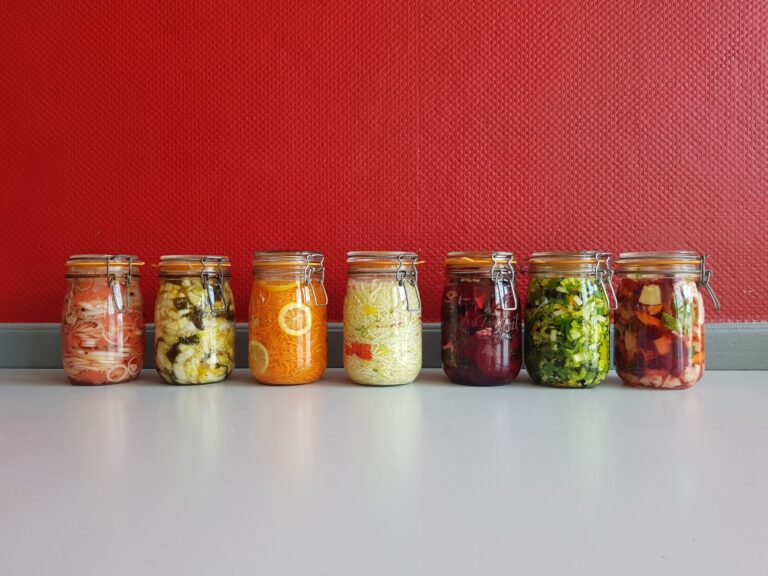
Fermented vegetables transform raw produce into nutrient-dense foods that support digestive health and nutrient bioavailability through the action of beneficial bacteria. Home fermentation requires understanding only a few core principles—salt concentration, anaerobic conditions, and temperature—to produce safe, shelf-stable vegetables reliably. Learning to ferment vegetables at home gives you control over ingredients, eliminates added sugars and preservatives found in commercial products, and produces foods compatible with Low-Carb, keto, and intermittent fasting protocols.
Understanding Lacto-Fermentation as a Preservation Method
Lacto-fermentation is a metabolic process in which naturally present lactic acid bacteria (LAB)—primarily Lactobacillus species—consume sugars in vegetables and produce lactic acid as a byproduct, lowering the pH and preserving the food. The term “lacto” refers to lactic acid, not dairy lactose, making fermented vegetables suitable for those avoiding milk products. These bacteria exist on vegetable surfaces and in the salt brine environment, requiring no starter cultures or special ingredients beyond salt and water. The lactic acid produced acts as a natural preservative, creating an acidic environment hostile to pathogens like Clostridium botulinum, the bacterium responsible for botulism.
Traditional fermentation has preserved vegetables for thousands of years across cultures from Korea to Eastern Europe to the Middle East. Sauerkraut production in Germany dates to at least the 16th century, when cabbage fermentation became a critical method for preserving vegetables through winters when fresh produce was unavailable. Archaeological evidence suggests fermentation techniques were employed in ancient Mesopotamia and China, where fermented vegetables provided essential nutrients and probiotics long before modern microbiology identified the beneficial bacteria involved.
The Critical Role of Salt in Safe Fermentation
Salt concentration determines which microorganisms thrive in your fermentation vessel, making it the primary safety mechanism in home fermentation. A salt brine of 2 to 5 percent by weight (measured as salt relative to the total weight of vegetables plus water) inhibits the growth of harmful bacteria while allowing Lactobacillus species to flourish. This selective environment is why fermentation is considered one of the safest food preservation methods—the salt creates conditions where beneficial bacteria outcompete pathogens, and the lactic acid produced further acidifies the environment to pH levels below 4.6, where botulism toxin cannot form.
The salt concentration you choose depends on your vegetables and taste preferences. A 3 percent brine (30 grams of salt per liter of water) represents a standard starting point that prevents pathogenic growth while producing vegetables with balanced flavor. Higher salt concentrations of 5 percent slow fermentation slightly but increase safety margins and are often used in commercial operations and traditional recipes like Korean kimchi, which typically uses 2 to 3 percent salt by weight of the vegetables themselves rather than the total brine.
Managing Oxygen Exposure and Fermentation Vessels
Maintaining anaerobic conditions—an environment without oxygen—prevents unwanted mold and surface growth while allowing beneficial LAB to multiply. Vegetables must remain submerged beneath the brine throughout fermentation, as any portion exposed to air will develop mold or kahm yeast (a harmless but undesirable white film). You can achieve submersion using glass weights, fermentation lids designed with airlocks, or simple methods like placing a smaller jar filled with water inside the larger vessel to hold vegetables down. Airlocks allow carbon dioxide produced during fermentation to escape without allowing oxygen to enter, creating ideal conditions for LAB growth.
Glass fermentation jars with airlock lids, such as those manufactured by Fido or traditional German fermentation crocks, simplify the process by automatically venting gases while preventing air infiltration. However, simple glass jars covered with cloth or coffee filters work equally well if you manually submerge vegetables daily and maintain brine levels. The vessel material matters—glass is inert and does not interact with the acidic brine, while metal lids can corrode. Food-grade plastic buckets are acceptable for larger batches but avoid metal containers, which may react with the acidic environment.
Temperature, Fermentation Duration, and Historical Practice
Fermentation speed depends directly on temperature, with warmer environments accelerating bacterial activity and faster acid production. Temperatures between 60 and 75 degrees Fahrenheit (15 to 24 degrees Celsius) represent the ideal range for home fermentation, producing balanced flavor development over 1 to 4 weeks depending on vegetable type and salt concentration. Cooler temperatures of 50 to 60 degrees Fahrenheit slow fermentation to 4 to 8 weeks but produce more complex, subtle flavors and allow better texture preservation. Temperatures above 75 degrees Fahrenheit accelerate fermentation but may produce softer vegetables and less refined flavor profiles.
Traditional fermentation practices in Eastern Europe and Asia developed around natural temperature cycles and storage conditions. In Central European root cellars, temperatures remained around 50 degrees Fahrenheit year-round, creating slow fermentations that could be stored for 6 to 12 months without refrigeration. Korean families practicing kimjang (the traditional kimchi-making season) historically fermented large batches in autumn when outdoor temperatures naturally cooled, then stored fermented kimchi in underground chambers where it aged slowly throughout winter. Modern home fermenters replicate these conditions by fermenting at room temperature for initial bacterial activity, then transferring jars to cooler storage areas like refrigerators to slow fermentation and extend shelf life.
Frequently Asked Questions
What vegetables ferment most successfully for beginners?
Cabbage, carrots, cucumbers, and green beans ferment reliably and forgive minor technique variations because their natural sugars support robust LAB growth. Cabbage in particular produces abundant juice, reducing the need to add extra brine, and develops complex flavor within 1 to 3 weeks. Start with simple recipes using single vegetables before advancing to mixed ferments.
How do you know when fermentation is complete?
Fermentation is complete when bubbling stops (indicating LAB have consumed available sugars), the vegetables taste pleasantly sour, and the pH has dropped below 4.6 (measurable with pH strips). Most home ferments reach this point within 2 to 4 weeks at room temperature, though you can taste vegetables daily to determine your preferred sourness level. Once fermented to your liking, transfer jars to refrigeration, which nearly halts fermentation and extends shelf life to several months.
Can fermented vegetables go bad or develop botulism?
Properly fermented vegetables with correct salt concentration and submerged vegetables cannot develop botulism because lactic acid lowers pH below the 4.6 threshold where the toxin forms. Signs of spoilage include pink or orange mold (indicating contamination), slimy texture, or foul odors; white kahm yeast on the surface is harmless and can be skimmed away. Fermented vegetables stored in refrigeration remain safe for 4 to 6 months or longer.
Mastering home fermentation requires understanding salt’s role as a selective growth medium, maintaining anaerobic conditions through proper submersion, and managing temperature to control fermentation speed. These three principles—salt concentration, oxygen exclusion, and temperature management—create a naturally safe preservation method that has sustained human populations for millennia and delivers probiotic-rich vegetables suited to virtually any restrictive diet protocol.
