
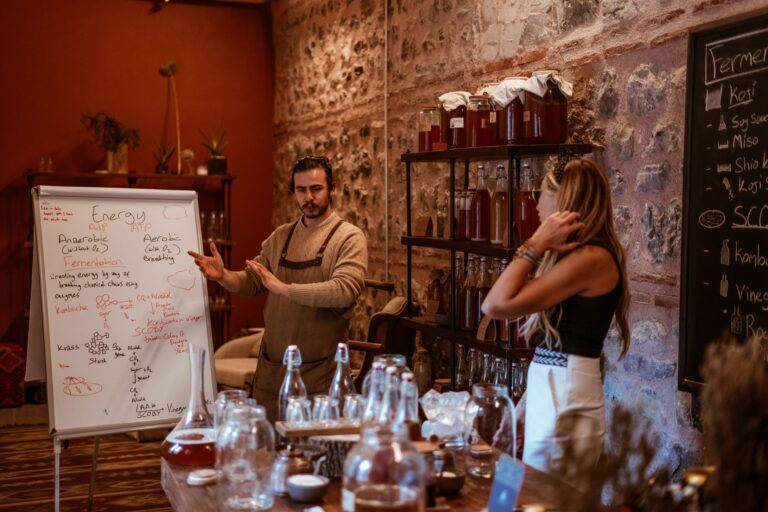
Key takeaways
- Kombucha is a fermented beverage created by combining sweetened tea with a SCOBY—an acronym for Symbiotic Culture of Bacteria and Yeast.
- The SCOBY is not a single organism but rather a complex microbial ecosystem containing multiple bacterial and yeast species that work synergistically to ferment tea.
- Kombucha’s documented history traces back to ancient China, where it was known as “the tea of immortality” and valued in traditional medicine practices for liver support and energy restoration.
- How much sugar remains in kombucha after fermentation completes?
Kombucha has emerged as a cornerstone beverage in functional nutrition and restrictive diet communities, valued for its probiotic content and potential digestive benefits. Understanding what kombucha actually is and how fermentation transforms sweet tea into a living food requires knowledge of both microbiology and culinary science. This knowledge empowers home fermenters and consumers to make informed choices about this ancient beverage.
Defining Kombucha: The Basics of a Fermented Tea Beverage
Kombucha is a fermented beverage created by combining sweetened tea with a SCOBY—an acronym for Symbiotic Culture of Bacteria and Yeast. The SCOBY acts as a living inoculant that initiates and sustains the fermentation process, transforming ordinary tea into a fizzy, slightly tangy drink. The base recipe requires only four ingredients: brewed tea (typically black or green), sugar, water, and the SCOBY culture itself, though variations exist across different cultures and home fermentation traditions.
The resulting liquid contains acetic acid, B vitamins, and beneficial bacteria strains including Acetobacter species. Records of kombucha consumption date back to the Qin Dynasty in China around 220 BCE, where it was valued as a health-promoting tonic. The beverage later spread to Russia and Eastern Europe, where it became integrated into traditional wellness practices before gaining popularity in Western health-conscious communities during the late twentieth century.
The Fermentation Process: How Bacteria and Yeast Transform Tea
Fermentation begins when the SCOBY is introduced to sweetened tea, initiating a metabolic process in which microorganisms consume sugars and produce organic acids and carbonation. The primary bacteria in the SCOBY, Acetobacter xylinum, produces cellulose that forms the characteristic rubbery layer—called the “mother”—which thickens with each fermentation cycle. Simultaneously, wild yeasts within the culture consume sugars and produce small amounts of ethanol and carbon dioxide, creating the natural carbonation that gives kombucha its signature fizz.
The fermentation timeline typically spans seven to thirty days, depending on temperature, tea type, and desired flavor intensity. During a standard fermentation at room temperature (68–85°F or 20–29°C), the pH of the liquid drops from approximately 3.5 to 2.5 as acetic acid accumulates, creating an increasingly acidic environment that inhibits harmful pathogens while favoring beneficial bacteria. Home fermenters often report that kombucha fermented at warmer temperatures completes its cycle faster, with some batches reaching optimal flavor within five to seven days.
The SCOBY: Understanding the Living Culture
The SCOBY is not a single organism but rather a complex microbial ecosystem containing multiple bacterial and yeast species that work synergistically to ferment tea. The cellulose layer that forms during fermentation serves as both a physical barrier protecting the liquid beneath and a structural home for the microorganisms themselves. Each SCOBY develops a unique microbial profile based on its environment, water chemistry, and the specific strains it harbors, which explains why kombucha fermented with different SCOBYs can produce subtly different flavors and characteristics.
A mature SCOBY can be reused for multiple fermentation cycles, often lasting indefinitely with proper care and feeding. Brewers who maintain their cultures report that SCOBYs become increasingly robust over time, developing thicker cellulose layers and more stable fermentation patterns. The “mother” SCOBY produces a “baby” layer during each fermentation cycle—a new cellulose sheet that forms on the surface of the brewing liquid and can be separated and used to start new batches or shared with other fermentation enthusiasts.
Historical Development and Global Fermentation Traditions
Kombucha’s documented history traces back to ancient China, where it was known as “the tea of immortality” and valued in traditional medicine practices for liver support and energy restoration. The beverage traveled along trade routes through Russia and into Eastern Europe during the early twentieth century, where it became embedded in folk wellness traditions. By the 1960s and 1970s, kombucha gained attention in Western alternative health circles, though scientific study of its fermentation mechanics and microbiology remained limited until the 1990s and 2000s.
The modern kombucha industry began its expansion during the 1990s when commercial brewers like GT’s Living Foods, founded by Greg Tully in California, began bottling and distributing kombucha to mainstream retailers. Today, the global kombucha market includes both large-scale commercial producers using temperature-controlled fermentation tanks and countless home fermenters maintaining their own SCOBY cultures. Research published in food science journals has documented the presence of Acetobacter aceti, Gluconacetobacter species, and Zygosaccharomyces yeasts in commercial kombucha samples, confirming the consistency of the fermentation process across different production methods.
Frequently Asked Questions
How much sugar remains in kombucha after fermentation completes?
The sugar content of finished kombucha depends on fermentation length and temperature, but typically ranges from 2 to 8 grams of residual sugar per serving. Longer fermentation periods result in lower residual sugar because the microorganisms have more time to consume the sweetener. Home fermenters can test sugar levels using a hydrometer—a tool that measures specific gravity and indicates how much sugar has been consumed.
Is kombucha safe to ferment at home, and what are the main contamination risks?
Home kombucha fermentation is generally safe when proper sanitation protocols are followed, as the acidic environment created during fermentation inhibits most pathogens. The primary contamination risk involves mold growth, which appears as fuzzy white, green, or black spots on the SCOBY surface and indicates the batch should be discarded. Maintaining proper temperature, using clean brewing vessels, and keeping the fermentation vessel covered with a breathable cloth prevents most contamination issues.
Can kombucha be incorporated into low-carb and keto diet protocols?
Kombucha can fit into Low-Carb and keto approaches when residual sugar content is accounted for in daily macronutrient tracking, typically contributing 2 to 8 grams of carbohydrates per serving depending on fermentation length. Longer fermentation produces kombucha with lower sugar content and higher acidity, making it more compatible with stricter carbohydrate restrictions. Some people following ketogenic protocols choose to extend their home fermentation to 21 to 30 days to minimize residual sugars.
Kombucha represents a practical intersection of traditional fermentation science and modern functional nutrition, offering a beverage that delivers probiotics, organic acids, and metabolic byproducts from a straightforward fermentation process. Whether purchased commercially or brewed at home, understanding the role of the SCOBY, the timeline of fermentation, and the microbiology behind the transformation from sweet tea to tangy tonic enables informed consumption choices aligned with individual health goals and dietary protocols.
