
Key takeaways
- Standing exercises activate your core and improve proprioception more effectively than seated or machine-based alternatives.
- Five essential standing exercises—goblet squats, Romanian deadlifts, overhead press, squat to chair, and incline pushups—build functional strength for daily tasks like climbing stairs and carrying groceries.
- Progression happens naturally: start with bodyweight exercises, then add resistance as your strength improves while always prioritizing proper form.
- These movements teach your body to work as a unit, reducing fall risk and improving your ability to perform everyday activities independently after 65.
After 65, maintaining strength becomes critical to independence. But the path doesn’t require expensive gym memberships or complicated equipment—just your body weight and the right selection of standing exercises. According to personal trainers and physical therapists, standing workouts offer distinct advantages over seated and machine-based alternatives, particularly for preventing falls and maintaining the everyday strength needed for household tasks, stair climbing, and recovering from stumbles.
Why Standing Strength Work Makes a Difference
Core activation and body awareness
Standing exercises demand more from your core and nervous system than seated alternatives. Joe LaCerra, Owner and Personal Trainer at W.O.L.F Gyms, explains that standing exercises “inherently require greater core activation” and teach your body “greater resiliency and proprioception.” Even when an exercise targets your legs or arms primarily, your core, hips, and smaller supporting muscles all contribute to maintaining balance and control throughout the movement.
The difference matters. Because standing workouts force you to manage your posture and balance while moving against resistance, they activate multiple muscle groups simultaneously—your entire body works as a unit rather than in isolation.
Reducing falls through functional capability
As we age, the risk of falling increases significantly, yet many older adults can reduce this risk substantially through proper strength training. “The more capability your body has in a standing position, the less likely these falls are to occur,” LaCerra notes. Standing exercises specifically build that capability by training the exact movement patterns you rely on during daily life.
Hazel Anderson, PT, DPT, ScD, DipACLM, Associate Professor at the University of St. Augustine for Health Sciences, underscores this connection: “They teach different parts of the body to work together during the same movements we use every day—squatting, stepping, pushing, pulling, lifting, and carrying.” That functional strength “can make climbing stairs, carrying groceries, completing household tasks, and recovering from a stumble feel more manageable.”
Five Standing Exercises for Full-Body Strength
Goblet Squats strengthen your quadriceps and glutes while forcing your core to stabilize. The movement involves holding weight in front of your chest while squatting down, which creates a natural forward shift that requires constant core engagement to maintain a neutral spine. LaCerra emphasizes that “this movement strengthens your quads and glutes while forcing your body to maintain a strong core and neutral spine by holding the weight directly in front of you.”
Romanian Deadlifts target the posterior chain—your glutes, hamstrings, and spinal erectors—the muscles that support posture and protect your lower back during bending movements. Many people avoid bending as they age, fearing spine injury, but LaCerra counters that misconception: “Too often, people avoid bending out of fear of injuring their spine. A properly executed Romanian deadlift will actually make your spine more resilient over time.” The exercise teaches your body to bend safely while under tension, building long-term resilience.
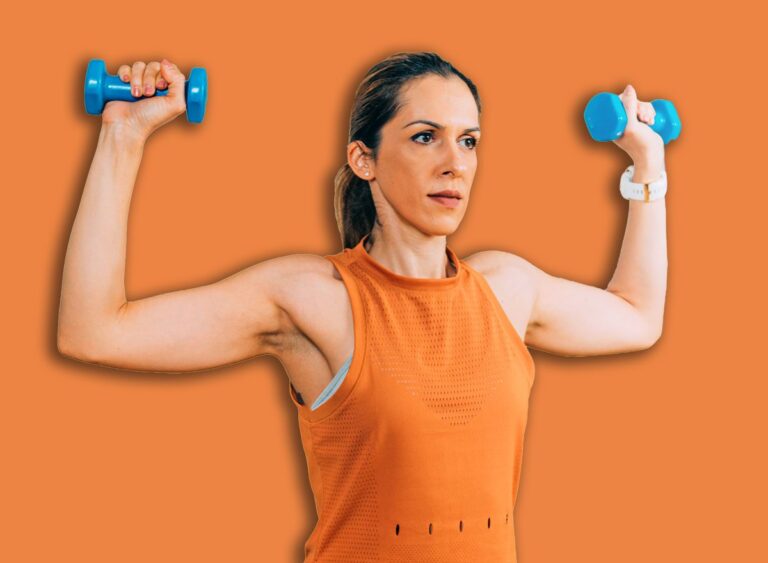
Standing Overhead Press brings your upper body into the equation. By pressing weight overhead from a standing position, you strengthen your shoulders and triceps while simultaneously engaging your core and improving your overhead strength. LaCerra notes: “This exercise brings the upper body into the equation, strengthening the shoulders and triceps primarily. By performing this movement standing, you are engaging your core and working on your overhead strength.” This matters for reaching, pushing, and lifting objects above shoulder height.
Squat to Chair mimics one of the most common functional movements in daily life—standing up from a seated position. Anderson values this exercise specifically: “The squat to chair is one of my favorite lower-body exercises because it practices the same movement used to stand from a chair, get out of a car, or get on and off the toilet.” By practicing this movement under controlled conditions with proper form, you build the exact strength needed for these transitions.
Incline Pushups build pushing strength in your chest, shoulders, triceps, and core—muscles you use to push open doors, move objects, and rise from chairs or the floor. Anderson explains that “incline pushups strengthen the chest, shoulders, triceps, and core—the muscles used to push open doors, move objects, and push up from an armrest or the floor.” The beauty of this exercise is built-in progression: “A wall is a great starting point. As strength improves, moving the hands to a countertop or lower stable surface increases the amount of body weight the upper body must support.”

Progressive Training for Safety
Starting your routine with body weight alone
You don’t need weights, resistance bands, or gym equipment to begin. Bodyweight versions of these five exercises provide sufficient challenge for most people starting out. Focus first on proper form—controlled movement, neutral spine, balanced weight distribution. Rest between sets and complete multiple sets of each movement to build foundational strength without overwhelming your joints or nervous system.
Advancing your exercises over time
Once bodyweight becomes easier, you can add resistance. Goblet squats progress by holding a heavier object—dumbbell, kettlebell, or water jug. Romanian deadlifts progress with added weight held at your sides. Standing overhead press advances by using dumbbells instead of body weight. Squat to chair remains bodyweight-focused but can progress by lowering deeper or pausing longer at the bottom. Incline pushups progress by moving your hands to progressively lower surfaces—countertop to chair to floor—which increases the percentage of body weight your upper body must support.
Always prioritize form over weight. A lighter movement performed with control and proper alignment beats a heavier, sloppy repetition every time.
Applying Standing Strength to Daily Life
These five exercises create compound effects. The strength built through standing exercises transfers directly to your capacity for real-world tasks. Climbing stairs becomes easier because your quads and glutes are stronger. Carrying groceries requires less strain because your core is more stable and your hip stability has improved. Rising from a chair or toilet happens smoothly because you’ve practiced that exact movement pattern.
People often assume they need expensive equipment or facility access to build strength, but these five standing exercises can restore functional strength and reduce fall risk more efficiently than many gym-based programs. Your body weight, gravity, and proper form are sufficient to create meaningful strength gains at any age after 65.
Frequently Asked Questions
Do I need gym equipment to do these standing exercises?
No. All five exercises can be performed with just your bodyweight as a starting point. You can add resistance later—weights, dumbbells, or household objects—as your strength improves.
Which standing exercises work the lower body?
Goblet squats, Romanian deadlifts, and squat to chair all target the lower body. Goblet squats and Romanian deadlifts strengthen your quads, glutes, and hamstrings, while squat to chair practices the movement pattern of standing from a seated position.
How should I progress the exercises as I get stronger?
For goblet squats and Romanian deadlifts, add weight held at your sides or with a dumbbell. For standing overhead press, use dumbbells instead of body weight. For squat to chair, lower deeper or pause longer at the bottom. For incline pushups, move your hands to progressively lower surfaces—from wall to countertop to chair—to increase the body weight your upper body must support.
