
Key takeaways
- Mayo Clinic studies confirm that older adults gain measurable strength from lighter resistance protocols targeting large muscle groups like the shoulders.
- WebMD advisors warn that overhead presses and heavy weights strain the shoulder tissues of adults over 50, where healing capacity slows and joint vulnerability increases.
- Physical therapists and strength coaches increasingly prescribe resistance bands as the primary tool for senior shoulder training.
- Older adults require 1.2 grams of protein per kilogram of body weight daily to recover and gain strength from resistance training.
Resistance training can slow and reverse the changes in muscle fibers associated with aging, according to Mayo Clinic researchers, meaning adults over 60 do not need to lift heavy weights to build strength. Instead, lighter weights combined with higher repetitions, resistance bands, and bodyweight exercises deliver significant strength gains while protecting aging joints from injury. This shift in fitness science opens new pathways for seniors to maintain shoulder function, independence, and vitality without the risk of overhead presses or heavy lifting.
Light Resistance Replaces Heavy Lifting for Safe Shoulder Strength
Mayo Clinic studies confirm that older adults gain measurable strength from lighter resistance protocols targeting large muscle groups like the shoulders. The research emphasizes that targeting these areas improves vitality and independence—two critical factors in maintaining quality of life after 60. Seniors who adopt light-resistance training experience the same muscle fiber adaptations that younger lifters achieve with heavy weights, but without the joint strain.
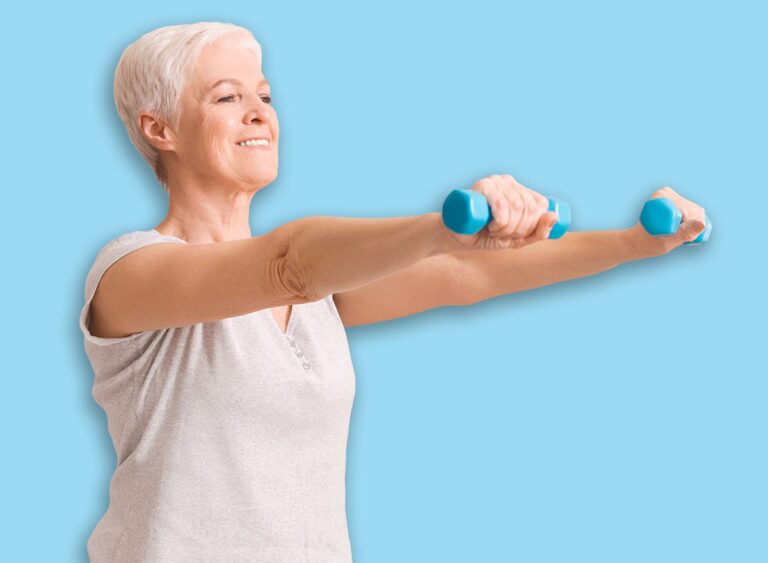
Fitness experts recommend using resistance bands, light dumbbells, or even water bottles to perform exercises like external rotations, lateral raises, and overhead presses. A physiotherapist’s home training plan for seniors prescribes 10–20 repetitions per set across 3 sets, with 1-minute rest intervals between sets. This protocol builds strength through controlled, deliberate movements that activate shoulder muscles without stressing healing tissues.
Why Heavy Weights and Overhead Presses Pose Risk After 50
WebMD advisors warn that overhead presses and heavy weights strain the shoulder tissues of adults over 50, where healing capacity slows and joint vulnerability increases. The shoulder joint, a complex network of muscles, tendons, and ligaments, becomes more susceptible to tears and chronic pain when subjected to sudden heavy loads. This risk is particularly acute for adults who have experienced previous shoulder injuries or who lack consistent training history.
Instead of traditional heavy lifting, experts recommend four foundational exercises: pendulum swings, wall crawls, scapular squeezes, and isometric shoulder contractions. These movements restore shoulder mobility and stability without stressing healing tissues. Pendulum swings involve gentle circular motions of the arm while bent forward at the waist, requiring no equipment and minimal effort. Wall crawls simulate climbing by moving fingers up and down a wall surface, engaging shoulder stabilizers without load. Scapular squeezes activate the muscles between the shoulder blades by pulling shoulders back and holding. Isometric contractions involve holding the shoulder in fixed positions against resistance, building strength without joint movement.
Resistance Bands and Light Dumbbells Deliver Results Without Heavy Loads
Physical therapists and strength coaches increasingly prescribe resistance bands as the primary tool for senior shoulder training. A YouTube-demonstrated protocol by a physiotherapist uses only light resistance bands for external rotations, overhead presses, and lateral raises—three movements that target all major shoulder muscle groups. The protocol requires no expensive equipment, no gym membership, and can be performed in a living room or bedroom.
BOSU’s senior fitness guide identifies additional effective exercises: shoulder rolls performed for 10 repetitions forward and backward, overhead presses with water bottles for 8–12 repetitions, front and lateral raises with light dumbbells for 10–12 repetitions, shoulder blade squeezes for 10 repetitions, and wall push-ups for 8–12 repetitions. These exercises build strength, improve flexibility, and reduce stiffness while remaining gentle on joints. Water bottles serve as cost-effective dumbbells for seniors on limited budgets, while resistance bands cost under $20 and last for years.
Protein Intake Becomes Critical for Muscle Recovery and Strength Gains
Older adults require 1.2 grams of protein per kilogram of body weight daily to recover and gain strength from resistance training. For a 150-pound person, this equals 82–85 grams of protein daily. Mayo Clinic researchers stress that muscles grow during rest periods and require adequate protein to rebuild stronger than before. Without sufficient protein intake, strength gains from gentle shoulder exercises remain limited regardless of exercise frequency or intensity.
This protein requirement differs from younger adults, who typically need 0.8 grams per kilogram daily. The increased demand reflects slower muscle protein synthesis in aging bodies and the greater stimulus needed to trigger muscle growth. Seniors should distribute protein intake across three to four meals, consuming 20–25 grams per meal to optimize muscle protein synthesis. Sources include eggs, fish, poultry, Greek yogurt, cottage cheese, legumes, and plant-based proteins.
Sarcopenia Prevention Drives Urgent Need for Senior Strength Training
Strength training is the only activity proven to slow the progression of sarcopenia—age-related muscle loss that accelerates after age 60. UT Southwestern Medical researchers found that sarcopenia reduces mobility, independence, and quality of life while increasing fall risk and injury severity. Seniors who develop sarcopenia experience strength declines of 3–8 percent per decade after age 30, with acceleration after age 60 unless addressed through resistance training.
Gentle shoulder exercises combat sarcopenia by maintaining muscle mass in the upper body, where loss directly impacts the ability to carry groceries, lift grandchildren, and perform overhead tasks. Wall push-ups, resistance band pulls, and chair squats activate large muscle groups and trigger the adaptations needed to preserve muscle fiber count and size. Even seniors who cannot tolerate traditional strength training benefit from low-impact protocols using resistance bands and bodyweight exercises.
Evolution of Senior Fitness Science Reshapes Exercise Guidelines
For decades, fitness professionals advised seniors to avoid resistance training altogether, fearing joint damage and injury. This conservative approach left older adults deconditioned and vulnerable to sarcopenia. Modern research from Mayo Clinic and UT Southwestern Medical reversed this guidance, establishing that resistance training—when performed with appropriate loads and form—prevents muscle loss and extends independence.
The shift reflects improved understanding of muscle physiology in aging bodies. Researchers now recognize that muscles remain responsive to training stimulus throughout life, requiring only appropriate load and recovery support. This discovery eliminates the myth that strength training is exclusively for younger populations.
Monitor Progress and Adjust Resistance as Strength Improves
Seniors beginning these four core exercises should track repetitions and resistance level weekly to ensure progressive overload—the gradual increase in training stimulus needed to drive continued strength gains. When 12–15 repetitions become easy, increase resistance band thickness or switch to heavier dumbbells. Progress typically appears within 4–6 weeks as exercises that initially felt challenging become manageable.
Consistency matters more than intensity for seniors over 60. Training three times weekly with light resistance produces superior long-term results compared to sporadic heavy lifting. Combined with adequate protein intake and rest days between sessions, this approach reverses age-related muscle decline and maintains shoulder strength, mobility, and independence for decades.
