
Key takeaways
- A solid 60-second glute bridge hold after 65 signals top-tier core strength and functional stability, according to EGYM Fitness Head Coach Bridget Moroney.
- Quality form matters more than duration—a perfect 60-second hold beats a sloppy 90-second one because compensation patterns lead to knee and back pain.
- Bridge strength directly supports independence in daily tasks: getting out of chairs, climbing stairs, carrying groceries, and walking with ease.
- The glute bridge fills a gap in most fitness programs by training anti-extension stability, which your body needs for real-world movement.
The glute bridge stands out as one of the most functional strength exercises for adults over 65, yet many people overlook it in favor of traditional ab work. Unlike crunches or sit-ups, which primarily train your core in flexion, the bridge teaches your body to stabilize and resist extension—the movement pattern your core actually needs for daily life.
According to Bridget Moroney, Head Coach at EGYM Fitness in Denver, Colorado, the ability to hold a stable bridge for 60 seconds after age 65 indicates top-tier core strength. This benchmark comes not from arbitrary standards but from functional fitness research and observation of people who maintain independence as they age.
What Makes the Bridge a Gold Standard Test
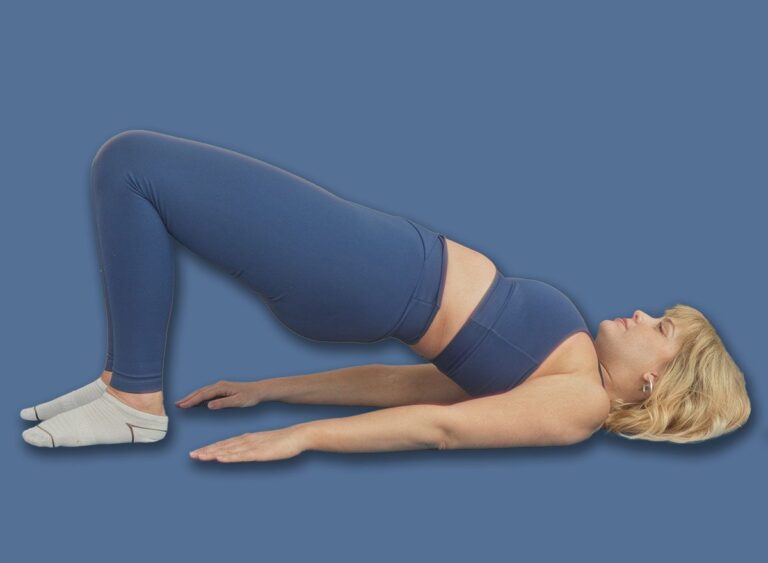
The glute bridge is deceptively simple: lie on your back with bent knees, press through your heels, and lift your hips until your body forms a straight line from knees to shoulders. The exercise targets your deep abdominal muscles, pelvis, hips, lower back, glutes, and hamstrings simultaneously. This multiplanar engagement is exactly what makes it a legitimate test of functional strength.
Moroney explains the biomechanics clearly: “Real-world movement doesn’t isolate your core anyway. Your glutes, core, and hip stability work together whether you’re climbing stairs or getting out of a chair.” This integrated approach separates the bridge from isolated ab exercises that don’t translate as well to real movement.
The 60-Second Standard and What It Signals
Sixty seconds of a stable, controlled bridge hold—without dropping your hips or allowing your lower back to take over—represents a realistic fitness milestone for active older adults. The benchmark reflects what Moroney calls “functional fitness standards and what we see in people who move well and stay independent as they age.”
Achieving this duration requires several components working together. Your glutes must engage consistently to prevent your lower back from compensating. Your core must brace to maintain neutral spine alignment throughout the hold. Your hip stabilizers need sufficient endurance to prevent hip drop or rotation. Each of these elements directly supports independence in aging.
Why 60 Seconds, Not Longer
The fixation on longer holds often backfires. A person who holds a bridge for 90 seconds with poor form—hips sagging, lower back arching to compensate, glutes disengaging—actually demonstrates weaker functional strength than someone holding for a solid 60 seconds with pristine mechanics. “The key is quality over duration: a strong 60-second hold with proper glute engagement and neutral spine beats a shaky 90-second hold where the back compensates,” Moroney states.
This distinction matters because compensation patterns developed during the bridge translate directly to movement dysfunction elsewhere. A lower back that takes over during bridging will likely dominate when you climb stairs or lift groceries, leading to chronic pain down the line.

Real-World Payoff of Bridge Strength
The bridge isn’t just an isolated test; it directly supports the movements that allow you to live independently. Strong glute bridge performance signals a stable core and strong glutes, both essential for handling daily demands without injury.
Getting out of a chair requires hip extension strength and core stability—exactly what the bridge trains. When your glutes and core are weak, your knees take the strain, leading to anterior knee pain over time. Climbing stairs demands the same pattern: powerful glutes and a stable core, working in concert.
Carrying grocery bags relies heavily on core stability to maintain neutral spine under load. A strong bridge translates to better posture while holding weight, reducing compensatory strain through your lower back. Walking with ease depends on consistent glute activation and hip stability—without these, your gait breaks down into a slower, more unstable pattern.
Moroney sums up the consequence simply: “Someone who can hold a solid bridge can do those things without compensation patterns that lead to knee pain or back problems down the line.”
How Daily Tasks Expose Weak Links
Many people don’t realize their bridge weakness until they notice pain after everyday activities. A stiff back after a long walk, knee soreness after climbing a flight of stairs, or lower back tension after carrying groceries are all signs that glute and core strength aren’t sufficient. The bridge test reveals these weaknesses before pain develops.
Training the Bridge Progressively
The beauty of the glute bridge is its scalability. You can modify it for beginners or progress it into genuinely demanding variations.
Starting with a basic bridge, focus on form: lie on your back, knees bent at roughly 90 degrees, feet flat on the floor hip-width apart. Press through your heels and lift your hips until your shoulders, hips, and knees align. Hold that position, maintaining neutral spine and consistent glute engagement. Begin by aiming for 30 seconds of quality holds, rest, and repeat.
As you progress, you can add resistance. Placing a dumbbell across your hips, a resistance band around your thighs just above the knees, or even a weight plate on your pelvis increases the demand. These variations prepare you for more advanced movements.
The single-leg glute bridge removes one leg’s contribution, forcing your working side to stabilize and extend against greater resistance. Start with just a few reps per side before returning to bilateral holds. The glute bridge march—where you lift one foot off the ground while holding the bridge—demands core stability, glute activation, and hip control simultaneously. These advanced variations should only be attempted after mastering the basic 60-second hold with perfect form.
Progression Checkpoints
Progress isn’t linear. You might hold a solid 60-second bridge, then attempt single-leg work and discover the imbalance between your sides. That’s normal and valuable information. Use each variation to identify weak links, then spend a week or two reinforcing those patterns before advancing further.
The Core Imbalance Most Programs Overlook
Moroney identifies a fundamental problem in typical fitness training: an imbalance between flexion-based work and extension-based work. Most people spend time training their core in flexion—crunches, sit-ups, planks. They neglect anti-extension training, which teaches the core to stabilize against the force of extension.
“The bridge fills that gap by teaching your core to stabilize and resist extension, which is what your body actually needs for real-world function. You need both patterns. The problem is imbalance, not flexion itself,” Moroney explains.
This reframing is important. The bridge isn’t meant to replace ab exercises entirely; it’s meant to complement them. A complete core program includes flexion work, rotation work, and anti-extension work. Many people who can bang out 50 crunches but struggle with a 60-second bridge have inadvertently created exactly the kind of imbalance that leads to injury during simple movements.
Your Bridge Assessment
Ready to test your own core strength? Set a timer, lie on your back, and establish proper bridge form: neutral spine, glutes engaged, hips held level. Can you hold 60 seconds without form breakdown? That’s the benchmark. If you’re closer to 30 seconds, that’s your starting point—with consistent practice, reaching 60 is realistic within a few weeks. If you can exceed 60 seconds with perfect form, you’re ready to progress to variations like single-leg holds or loaded bridges.
The glute bridge separates functional strength from cosmetic strength. It’s the kind of simple-to-learn, hard-to-master exercise that pays dividends in real life every single day.
Frequently Asked Questions
How long should I hold a glute bridge if I'm over 65?
According to Bridget Moroney, aiming for 60 seconds of a stable, controlled bridge hold—without dropping your hips or allowing your lower back to take over—signals solid core strength for older adults.
What muscles does the glute bridge work?
The glute bridge targets your deep abdominal muscles, pelvis, hips, lower back, glutes, and hamstrings simultaneously, making it a comprehensive functional strength exercise.
Is it better to hold the bridge longer or focus on perfect form?
Quality over duration is key. A strong 60-second hold with proper glute engagement and neutral spine is more valuable than a shaky 90-second hold where the back compensates, as poor form creates compensation patterns that lead to injury.
